

IBI CNAUTO Attends the Asia–Europe Automotive Cooperation Conference Sharing New Digital Pathways for Automotive Equipment to Expand Globally
From October 27 to 29, the 2025 High-Quality Development Conference of the Urumqi Area of the Xinjiang Pilot Free Trade Zone & the China Automotive and Parts Export Asia–Europe Cooperation Conference was successfully held at the Binglü Kunlun Hotel in Urumqi. As a key platform focusing on the expansion of China’s automobiles and components to Asia and Europe and on strengthening regional industrial cooperation, the conference brought together government officials, representatives from domestic and international automotive associations, major OEMs, and supply chain enterprises to conduct in-depth discussions on market opportunities, policy support, logistics channels, and service systems.
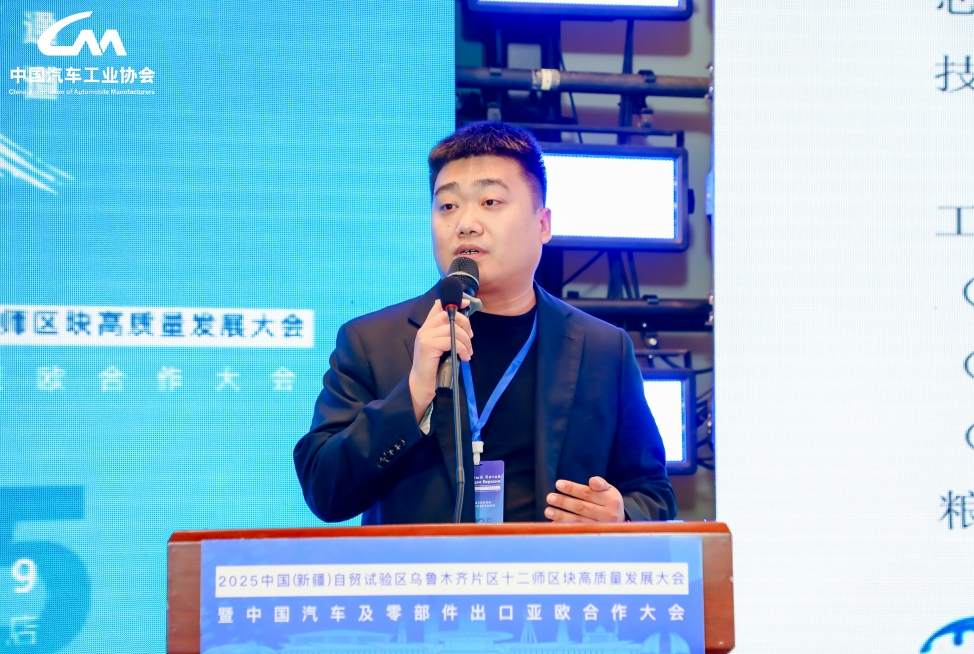
Li Qing, General Manager of IBI Xinjiang Digital Economy Headquarters, was invited to attend on behalf of the CNAUTO platform and delivered a keynote speech highlighting the cross-border channel system built through Silk Road Cloud Chain and its innovative applications in automotive trade.
The conference agenda focused on the core themes of “high-quality development” and “Asia–Europe collaboration,” featuring keynote speeches, roundtable discussions, trade dialogues, and on-site visits, providing full coverage of the entire automotive export ecosystem.
The October 28 keynote session centered on market insights, policy interpretation, and supply chain collaboration, while the roundtable discussions addressed key topics such as building overseas service systems and establishing trust mechanisms for used-car exports.
As IBI’s dedicated cross-border digital service platform for automotive equipment and construction machinery industrial clusters, CNAUTO’s digital empowerment practices became one of the key highlights of the conference.
In his speech, Li Qing elaborated on CNAUTO’s “dual-engine model” of cross-border industrial channels + AI-driven digital infrastructure, focusing on how digital technology addresses key challenges in automotive exports.
He noted that Chinese automotive and parts exports to Asia and Europe currently face three major bottlenecks: information asymmetry, low logistics efficiency, and slow after-sales response.
Leveraging IBI’s “1750 Strategy” (1 platform, 7 overseas hubs, 50 overseas warehouses), CNAUTO has built a service network across Central Asia, the Middle East, and Russia. Through AI-driven tax rebate calculations, compliance checks, and precision marketing, combined with warehousing, distribution, and local after-sales support via overseas facilities, CNAUTO enables seamless end-to-end connectivity from production to export to service.
Li further emphasized that Silk Road Cloud Chain plays a pivotal role in supporting automotive cross-border trade.
Its dual-country dual-warehouse model, with warehousing bases in Xinjiang and Kazakhstan/Uzbekistan, effectively addresses long delivery cycles and high logistics costs, aligning closely with the conference’s call to “build major automotive logistics corridors.”
Its fair-delivery mechanism, built with third-party quality verification, responds to key requirements raised in the topic “New Paths to Establish International Quality Systems for Auto Parts.”
By enabling full-process supply chain visibility, CNAUTO tackles information opacity in cross-border trade.
Its “distributed demand collection + matrix-based transaction matching” approach accurately aligns Asia–Europe market needs with domestic automotive supply, offering an efficient pathway for Chinese automotive exports.
Addressing key conference topics such as standardization of used-car exports and automotive parts quality systems, Li proposed a “digital + industrial” integrated solution:
• using digital tools to unify automotive supply chain resources and upgrade used-car exports from simple trade to “certification + full-process service” models;
• linking Xinjiang industrial parks and logistics companies to build an efficient “domestic consolidation + cross-border transport + overseas distribution” logistics network, leveraging Xinjiang’s Belt and Road hub advantage to lower costs and increase delivery efficiency for auto-parts exporters.
This proposal strongly aligned with keynote topics such as “Using Standards to Guide Used-Car Export Development” and “Serving the Belt and Road: Building Major Automotive Logistics Corridors,” earning wide recognition from participants.
During the conference, Li Qing held discussions with representatives from Xinjiang Henghui Electromechanical, Shandong Hi-Speed Xinjiang Logistics, and leaders from the 12th Division Bureau of Commerce on topics including synergy between FTZ policy and digital platforms, and constructing cross-border supply chains for Asia–Europe automotive parts.
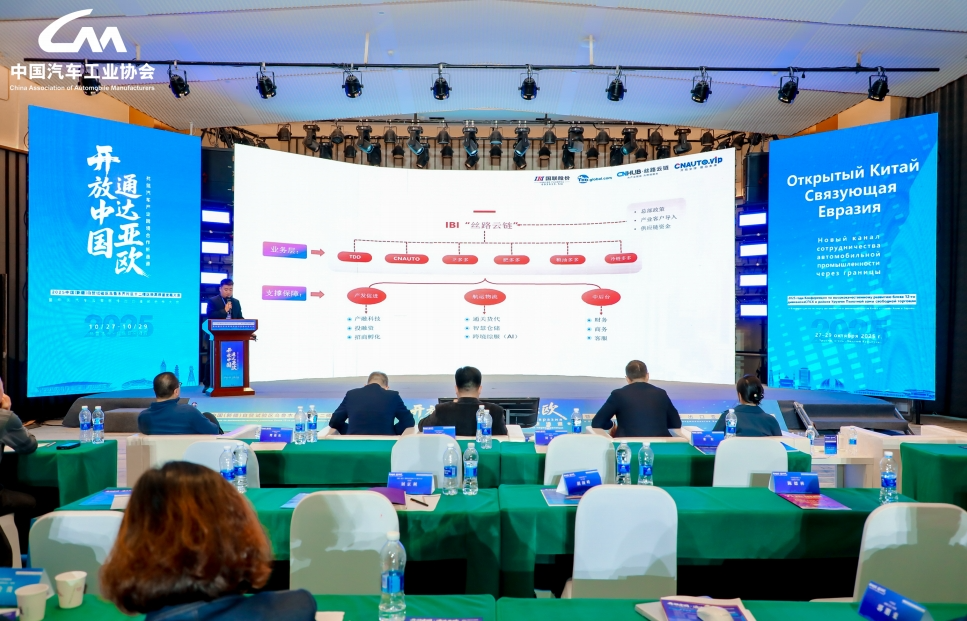
All parties agreed that Xinjiang—benefiting from its strategic location and policy advantages—has become a gateway for automotive exports to Asia and Europe, and that CNAUTO’s digital platform capabilities and cross-border service experience will further unlock regional industrial potential and support the joint expansion of “Xinjiang Manufacturing + Digital Services” to global markets.
As IBI’s core platform in the automotive cross-border sector, CNAUTO continues to focus on rubber, tires, vehicles, and construction machinery industrial clusters, promoting “cluster-based global expansion” through its ecosystem of domestic hubs, overseas centers, and digital services.
CNAUTO’s participation in the conference not only reflects the industry’s recognition of its digital achievements but also demonstrates its commitment to helping China’s automotive industry expand into Asia–European markets.
Looking ahead, CNAUTO will continue leveraging Xinjiang FTZ policy advantages, deepen cooperation across the supply chain, and deliver more efficient and competitive cross-border solutions for automotive and parts exports—supporting high-quality Belt and Road automotive cooperation.