

IBI Actively Implements the Central Government’s Xinjiang Work Strategy and Participates in the Mixed-Ownership Reform of XPCC Enterprises
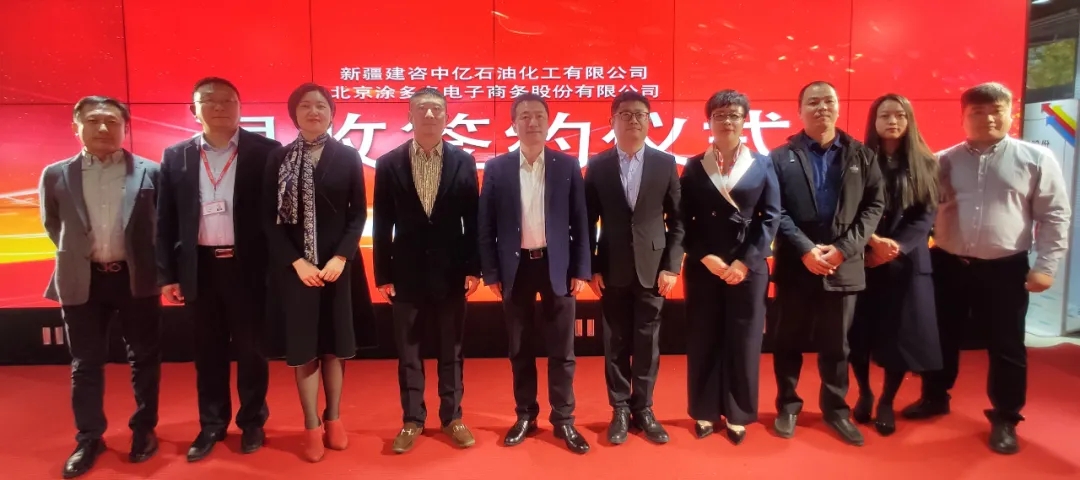
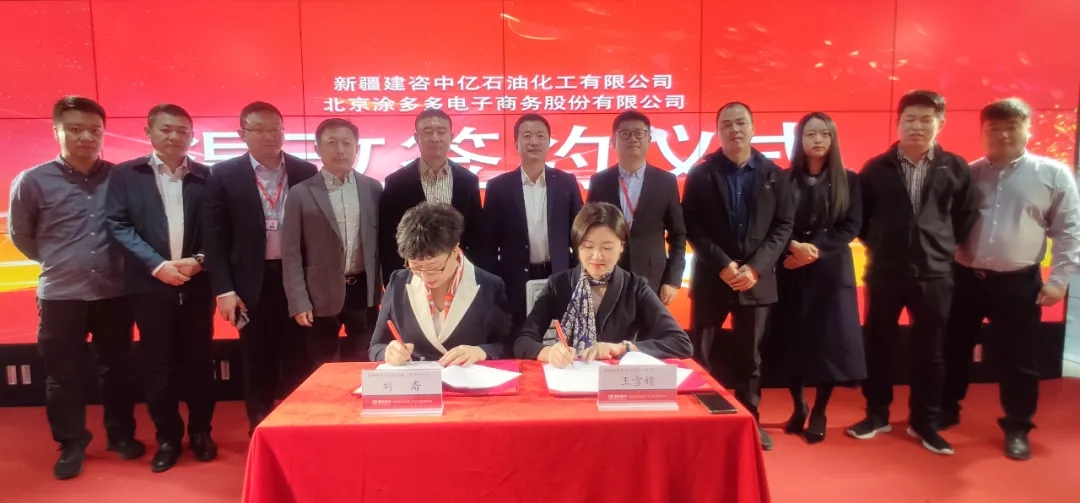
On November 2, IBI (603613.SH) subsidiary Toodudu (Beijing Toodudu E-Commerce Co., Ltd.) and Xinjiang Jianzhi Zhongyi Petrochemical Co., Ltd., a subsidiary of Xinjiang Jianzhi Group, held a signing and mixed-ownership reform launch ceremony at IBI headquarters in Beijing. This milestone marks a new step toward exploring the mixed-ownership reform of XPCC (Xinjiang Production and Construction Corps) enterprises and unlocking Xinjiang’s economic potential through industrial internet innovation.
Xinjiang Jianzhi Group, established in December 2006, is a state-owned enterprise under the 11th Division of XPCC, with a registered capital of RMB 1 billion. Its operations span five major sectors — construction consulting, trade circulation, financial services, architecture (including landscaping), and real estate — and it enjoys significant resource, policy, and talent advantages in the Xinjiang region.
At the signing ceremony, Xinjiang Jianzhi Group Party Secretary and Chairman Wang Shaojun, IBI Chairman Liu Quan, and President Qian Xiaojun jointly witnessed the signing by IBI Senior Vice President & Toodudu CEO Liu Zhai and Xinjiang Jianzhi Zhongyi Chairwoman Wang Xueping. Other participants included Xu Baohua (Deputy General Manager of Xinjiang Jianzhi Group), Hao Ying (Deputy General Manager and Director), Huang He (General Manager of Jianzhi Zhongyi), IBI CFO Tian Tao, and Toodudu Regional Marketing Director Li Qing.

Before the ceremony, the two parties conducted in-depth discussions on the overall strategic layout and specific cooperation mechanisms of the mixed-ownership reform.
Chairman Liu Quan stated:
“Guided by the spirit of the Third Central Xinjiang Work Symposium, we must fully leverage the industrial internet’s advantages to activate the latent resources of XPCC enterprises and cultivate Xinjiang’s distinctive industrial strengths. This mixed-reform collaboration should serve as a starting point for both sides to harness Xinjiang’s unique geographical position, develop platform-based economic models, and build globally connected industrial collaboration networks. The goal is to set a benchmark for opening-up and innovation, turning Xinjiang into a hub for both inland and border economic cooperation.”
Chairman Wang Shaojun remarked:
“IBI’s industrial internet DNA will help XPCC enterprises build high-standard digital platforms, improve industrial transaction efficiency, and unleash Xinjiang’s regional advantages. This partnership will create a new model for XPCC enterprise reform, invigorating the vitality of mixed-ownership economies.”
President Qian Xiaojun emphasized:
“The mixed-ownership reform between Toodudu and Jianzhi Zhongyi will serve as the vanguard of long-term cooperation between IBI and Xinjiang Jianzhi Group. With the industrial internet as a catalyst, XPCC enterprises will further consolidate their leading role in Xinjiang’s regional economic development. Together, we aim to enhance the resilience and modernization of the industrial and supply chains.”
Senior Vice President & Toodudu CEO Liu Zhai and Chairwoman Wang Xueping jointly affirmed their commitment to making this partnership a success, pledging to promote operational innovation, accelerate project implementation, and build a regional benchmark for mixed-reform enterprises in Xinjiang.
Both parties agreed that Xinjiang, as China’s strategic bridgehead for westward opening under the Belt and Road Initiative, holds vast potential. Through the sustained advancement of their joint reform project, they aim to enhance global resource allocation efficiency and build a leading model for industrial digitalization and digital industrialization in the region.